MASTER SHEO PERSHAD JI (MASTERJI)
RAI BAHADUR LALA. SHEO PERSHAD JI
(1833 – 1929)
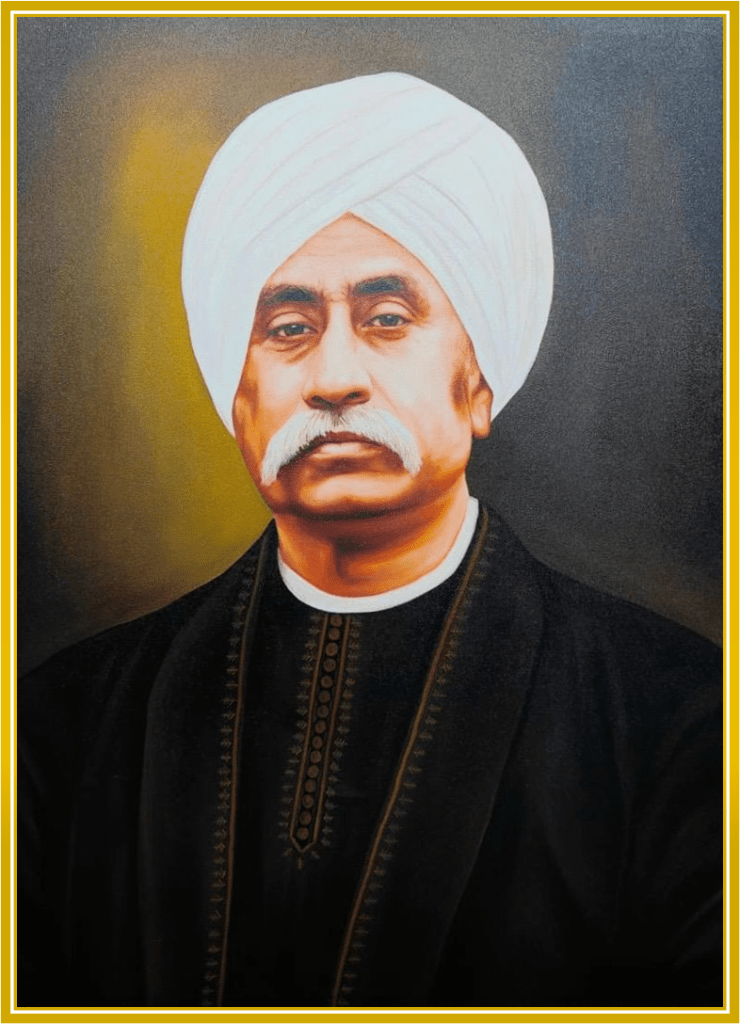
(Master Sheo Pershad ji (Masterji) – Rai Bahadur Lala. Sheo Pershad ji))
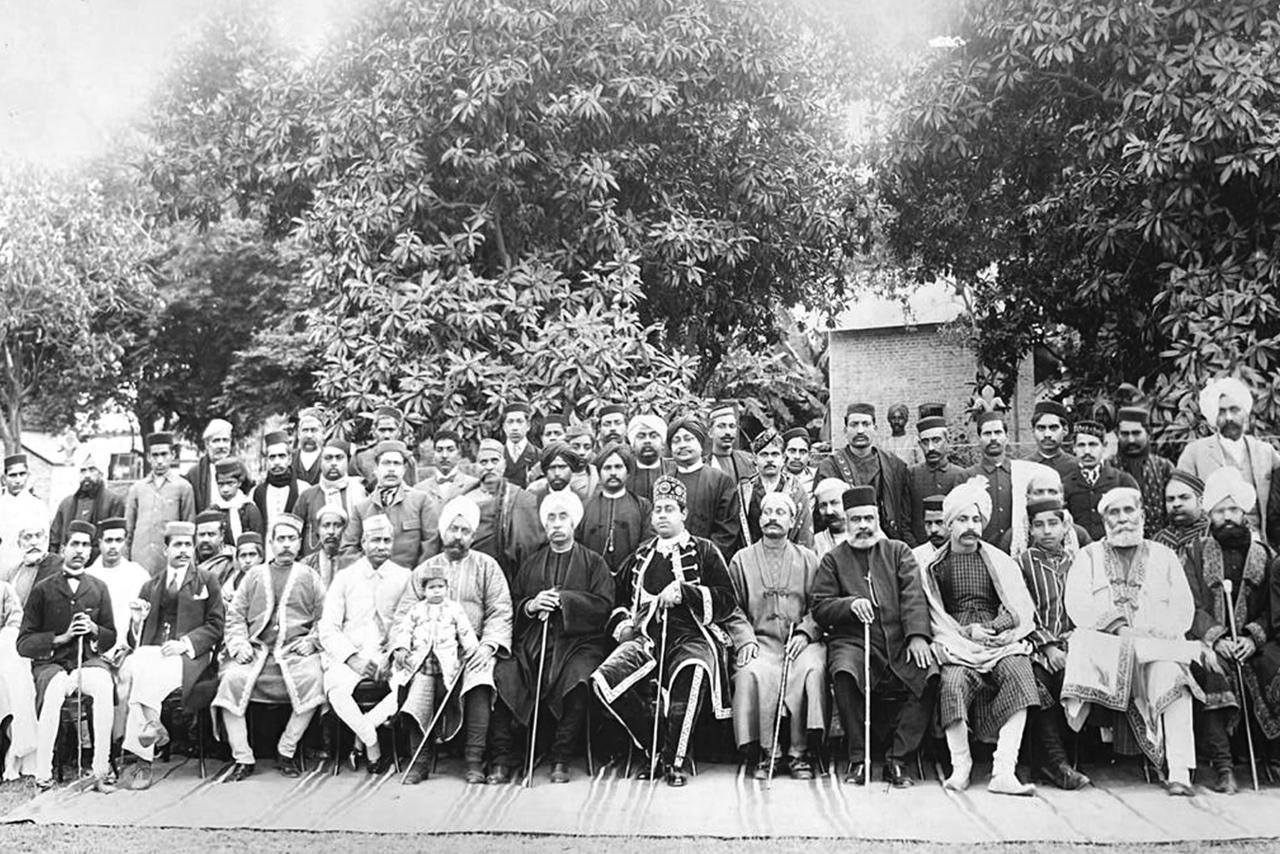
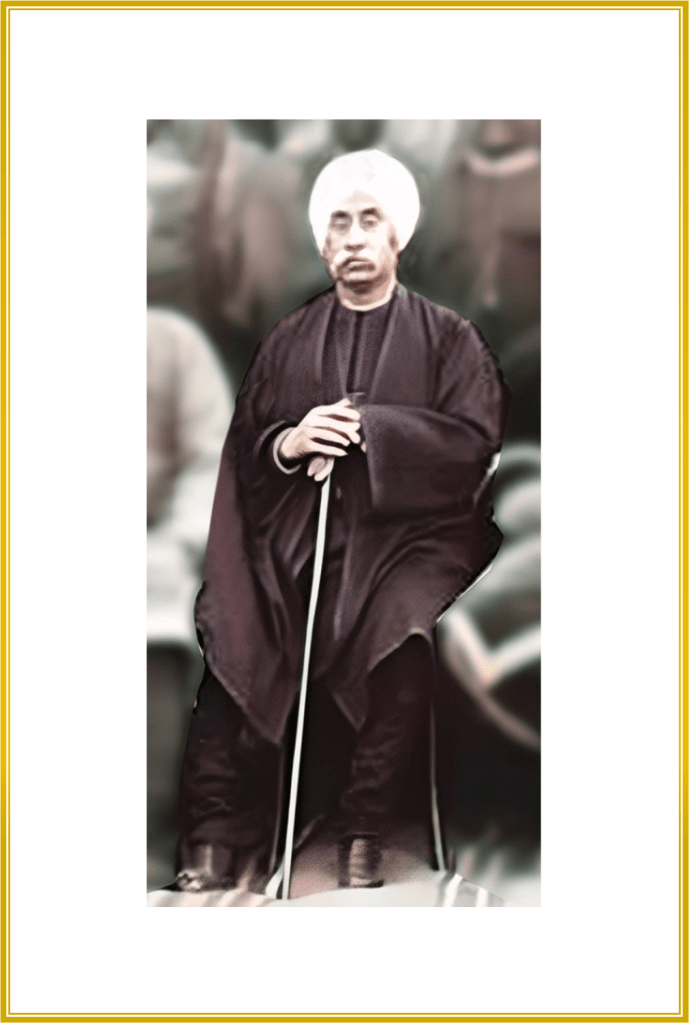
(Group Photograph of Master Sheo Pershad ji (Masterji) –Rai Bahadur Lala. Sheo Pershad ji seated in the centre front row wearing achkan and turban at Delhi Darbar in 1911)
- Master Sheo Pershad ji also known as Rai Bahadur Lala. Sheo Pershad ji (Sheo also spelled in English as Shiv, Shaw, Sew), respectably called “Masterji” (refers to Teacher/Guruji) by one & all was born in 1833 in Lahore. Masterji was a self-made hardworking person, in his early teens along with his studies helped his father in the running of his small Cloth Merchant Shop in Lahore which was running in losses. Masterji had a strong physique (over 6 feet tall with broad forehead & shoulders with photogenic memory) with extraordinary innate talent and intuition for numbers and abstract concepts (gifted mathematician) with the ability to simplify complex problems / solutions and efficiently maintained (tallied) the Bahi Khata (Accounts) of his father’s shop; since his childhood he followed a simple routine of vegetarian diet ( two meals a day with nothing in between) & regular exercise. By the time he reached the age of sixteen years Master ji besides being a meritorious student supported his family of four sisters & parents by selling cotton fibre cloth during the day & studying under the kerosene lamp in the evening. Masterji on completing his education by his hard work, honesty, sincerity, exceptional power to learn & teach got employed as a Teacher, then Headmaster of Government School and became the first Indian Inspector General of Schools in his late-twenties.
(I) The British Annexation of the Punjab (Lahore) in 1849 ( in February 1858 the Delhi territory was transferred from North West Province to Punjab Province), following the Second Anglo-Sikh War, marked a radical transformation in the region’s Administrative, Financial, and Land-holding Structures.
Post 1857 – 1910 :
(i) The East India Company’s rule in India officially transferred to the British Crown in 1858 with the passing of the Government of India Act, following the Indian Rebellion of 1857, bringing India under direct British rule and beginning the era of the British Raj.
(ii) Calcutta was the Capital of East India Company
(iii) Lahore was considered as a hub of Education, Law & Justice having esteemed Educational institutions & Courts.
(iv) Post Mutiny of 1857, as English language was relatively a new language for Delhi there were very few people who could speak, read or write English, Urdu, Hindi & the local dialects (Urdu, Hindi, Punjabi) and almost impossible to get an English Language based teacher.
(v) The state of affairs of formal education was extremely poor at that time in Delhi. Urdu was the main spoken and government, judicial & business language (records, documents, agreements, court proceedings were in Urdu) in Delhi and only hand full of people had taken formal education and knew English. For Education beyond 10th Standard the Student had to go to Lahore.
(vi) Joint Stock Companies Act, 1857 passed by the English Parliament introducing limited liability for members, though initially excluding banking/insurance with major amendments till 1913.
(vii) Government of India Act 1858 ,transferred rule of India from the East India Company to British Crown – start of British Government Rule.
(viii) Indian Contract Act, 1872, was passed by British India based heavily on these English principles, coming into force on September 1, 1872, forming a key codified system from English common law foundations.
(xi) The Indian Evidence Act, 1872 passed in India by the Imperial Legislative Council on 1 September 1872.
(x) Transfer of Property Act (TPA) , 1882 was assented by Governor General of India on February 17,1882 and came effective on July 1,1882 , this Act regulated the transfer of property between living persons in India, covering sale, mortgage, lease, exchange, and gift. This Act defined the legal requirements, such as, for example, the necessity of written documents and registration for specific transactions, protecting the rights of both transferors and transferees.
(xi) University of the Punjab, Lahore was established on December 14,1882.
In the year 1851 Master ji became the English Government Servant and in the year 1858 was transferred by the English Government from Lahore to Delhi.
- Masterji was requested by the then English Governor General’s Family, English District Magistrate & Other English Elite of Delhi to teach their children English & English based other subjects at Red fort (Lal Quila).
- Masterji became the favourate of the Elite of Delhi both English & Indians, was approached by Government Officials, Bankers & Trading Community for communication, advise, legal matters, Interpretation/Translation of the new English Laws, Rules & Regulations, Government policy making, drafting of agreements and other correspondence with the English on Trade & Commerce, Revenue, Legal & Other matters.
- Masterji with special permission from the English Government continued with his Cotton Cloth Trading & Importing Business under the firm name of “Sheo Pershad & Sons” became a business partner of Rai Chunnamal ji (the Biggest Banker of those times) with two shops on rent provided by Chunna mal ji (one under (Ground floor) their residential building -“Chunnamal Haveli” & the other near Fatehpuri Masjid, Chandni Chowk, Delhi) with roaring business of importing Makhmal Jeans Cloth from Manchester, England with the import licenses from the English and with major investments in upcoming infrastructure & utility companies.
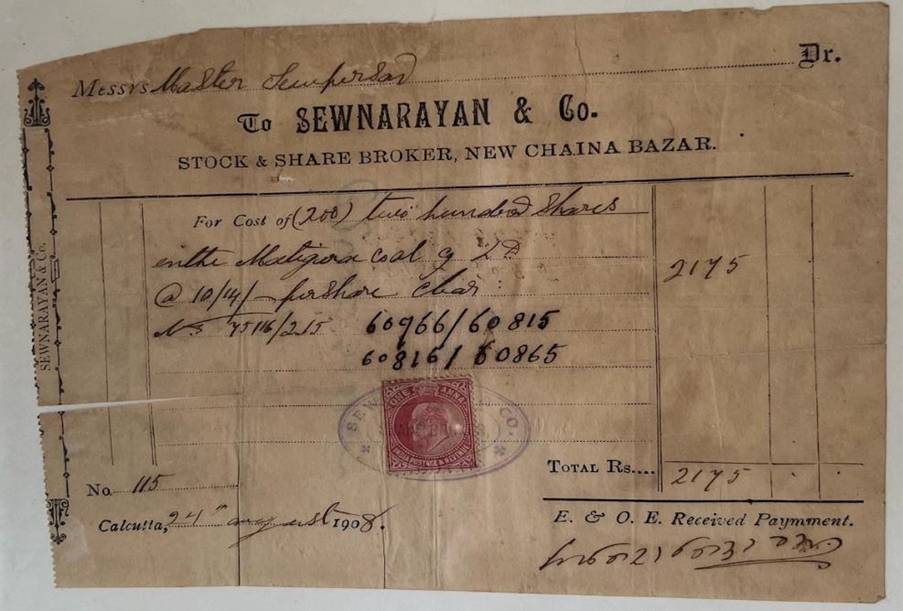
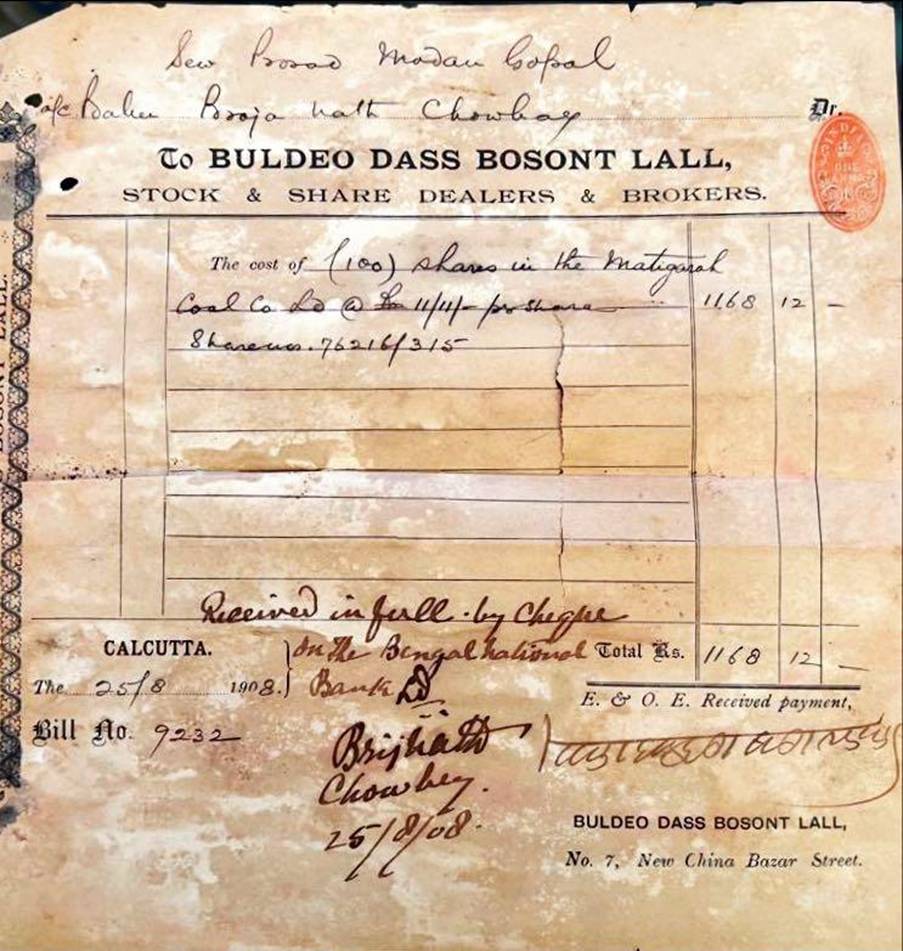
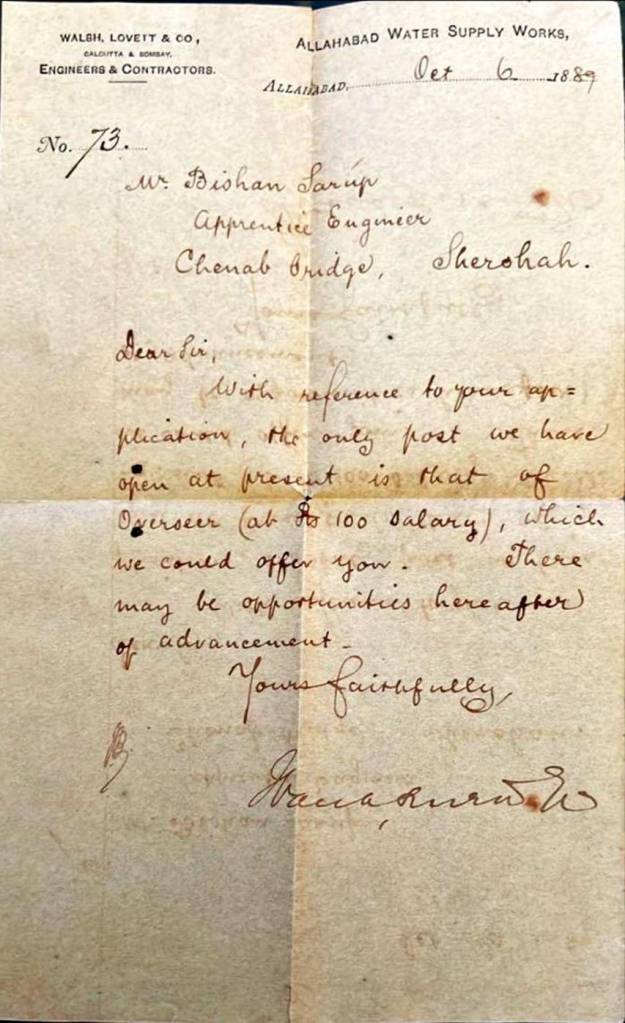
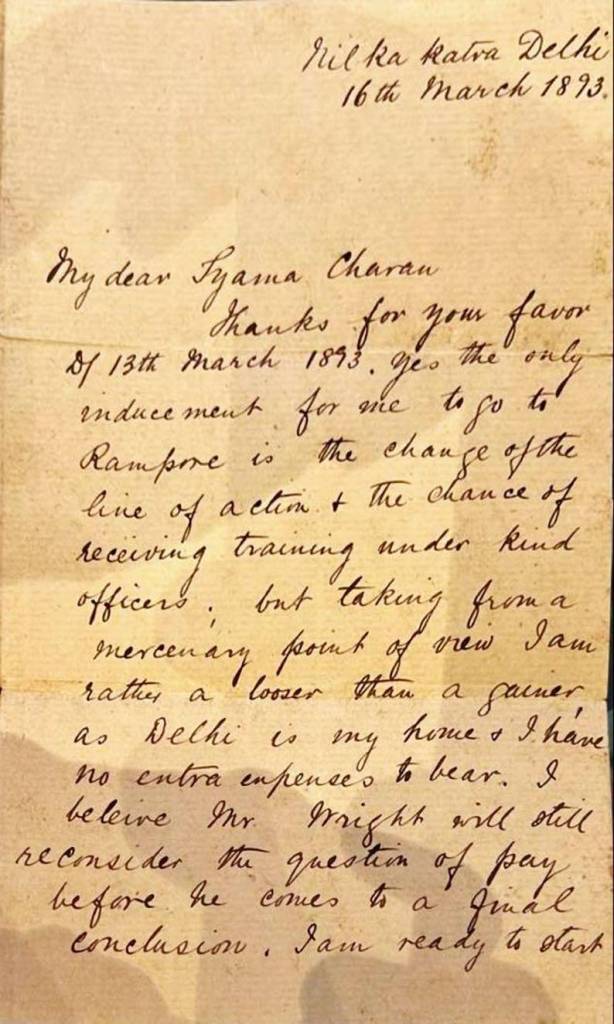
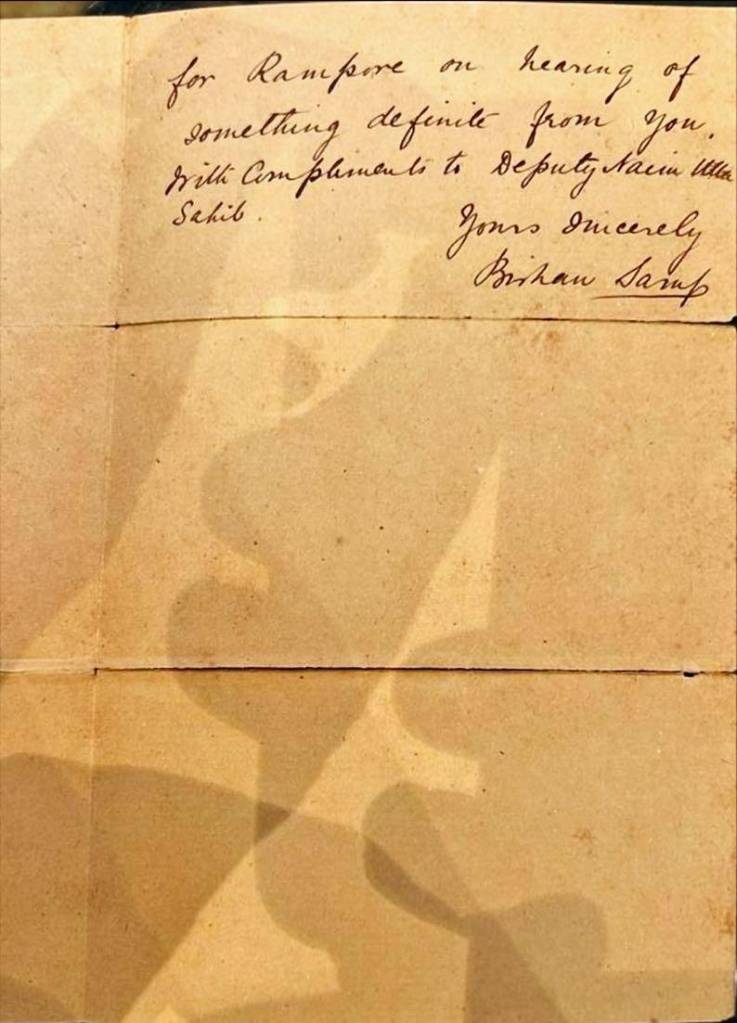
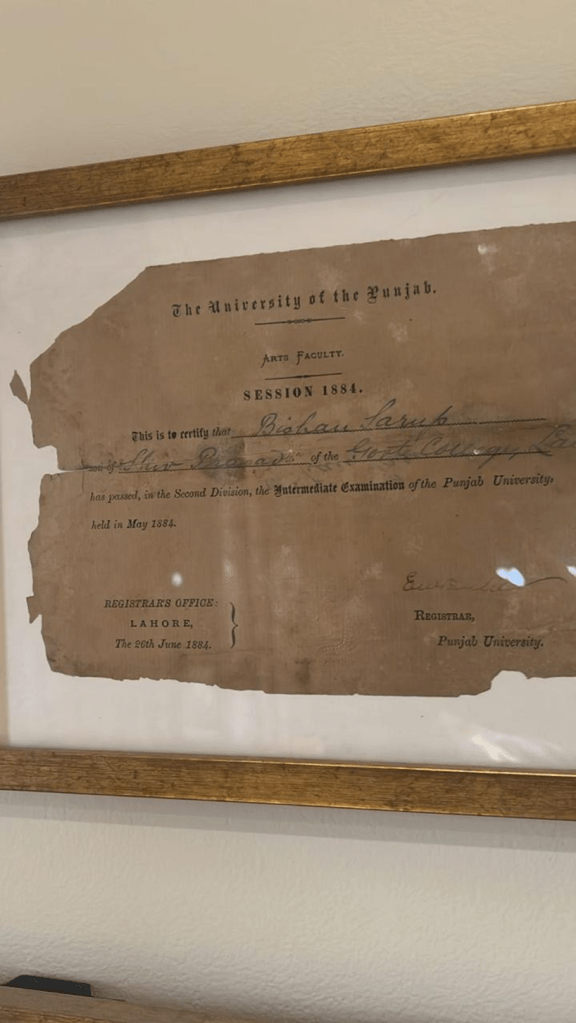
- Masterji educated his eldest Son Lala. Bishan Sarup in civil engineering in the year 1887 from Roorkee, Roorkee College ( Thomason, College of Civil Engineering) , who completed his Intermediate Examination (equivalent to 10th Standard) in Arts from University of Punjab, Lahore in 1884 ( as there was no such Educational Institution in Delhi for studies for Intermediate Examination – 10th Standard ) who joined his cloth business firm in 1890s as the Managing Partner, with his rich practical experience of working as an engineer on mega project of Chenab Bridge, Shershah, Kashmir in 1889 and other Mega Construction Projects ,which shaped modern India, played an important role in the preparation of the detailed project report with respect to plant layout and later with the construction of Delhi Cloth & General Mills (“Putli Ghar”). Lala. Bishan Sarup ji also supervised the construction of Pilli Kothi , Delhi (the first multi storey building constructed in Delhi in the year 1911) which in deep global recession which followed the First World War 1914-18 was sold to British Railways in 1921 at a great loss.
- 1858 Masterji was helped by the English Government to buy his 8 Acre sprawling Kothi “16, Darya Ganj, New Delhi (erstwhile Haveli of Nawab of Jhajjar)” on the banks of the river Yamuna in a Public Auction for Rupees Sixteen Thousand (Rs 16,000). The Kothi being walking distance from Red Fort on the banks of the River Yamuna, where bathing & swimming (breath of the river to & fro) in the river early morning was the start of the day was the routine for most elite of Delhi old city, hence this Kothi became the morning meeting & breakfast point for the elite Friends of Masterji & Bureaucrats, Judiciary & other prominent members of the English Government residing in Red Fort. In mid 1920s a portion of the Kothi was converted into a Hotel known as “Agra Hotel” which catered to Eminent Englishmen, Government Officials, Bureaucrats, Businessmen, Educationists, Lawyers, Sportsmen (Mohun Bagan Football Club for Tournaments) visiting the New Capital “New Delhi” from erstwhile Capital “Calcutta” of India with Bengali Staff which closed operations in early 2000.
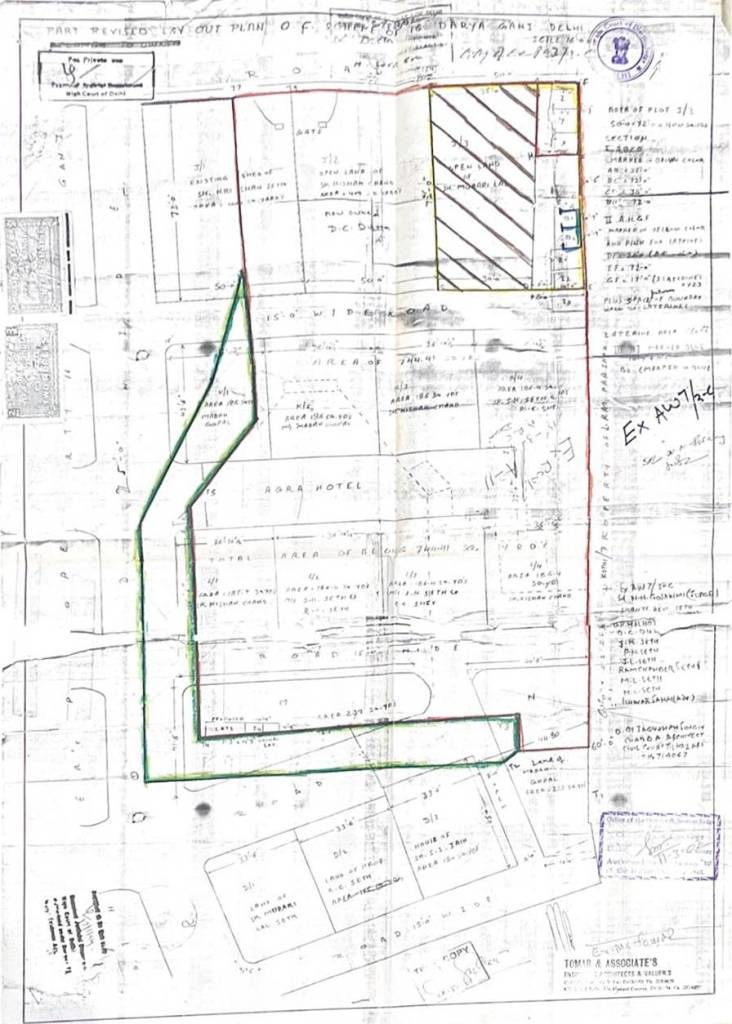
( Layout Plan of Agra Hotel, a part of Kothi No. 16, Darya Ganj, New Delhi)
- In late 1868, based on the roaring profiting in the Cloth Importing Business funded by Rai Chunna mal ji , it was decided to import the weaving machines from England & manufacture Makhmal Jeans Cloth in India for which the Draft Detailed Project report & importing documentation was prepared & supervision of Masterji with seed capital of 20% and balance with funding committed by Chunna mal ji which was supported later by his nephew RB. Ram Kishen Dass their efforts culminated in the establishment of Delhi Cloth & General Mills Co. (“Putli Ghar”) in 1889. Master ji was the Chairperson of the initial Board Directors’ Meetings of the Company (Delhi Cloth & General Mills Co, later known as Delhi Cloth Mills – D C M Ltd) guiding it during its formative years.
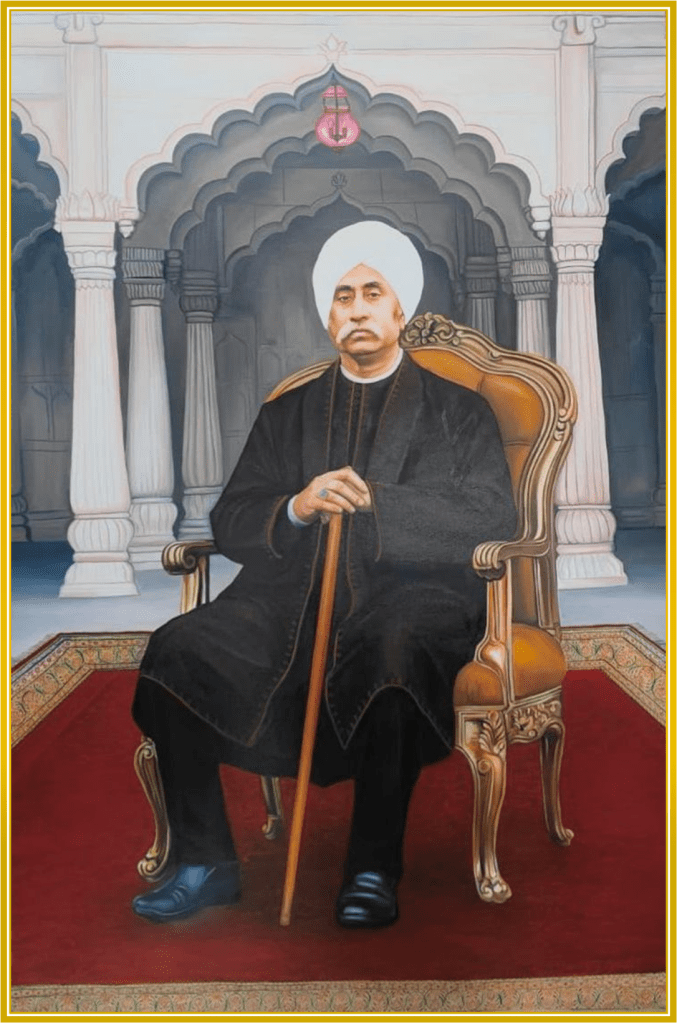
- In 1870s bought an entire Village “Pargana Lilloah (Liluah)” on the outskirts of Old Calcutta near Uttar Para for setting up Educational cum Skill Development Institutions for Women Empowerment being a visionary keeping view the future growth of the English Capital “Calcutta”.
- 1907 Masterji for his service to the Society & to the English Government was conferred the Title of Rai Bahadur Sheo (Shiv) Pershad.
- Masterji in his biography gave emphasis to maintaining good health by regular exercise, proper diet, good character, staying away from alcohol & other intoxications, hard work as essential attributes for his growth in life and he subscribed the same for his students & family members.
- Lala Lajpat Rai, R.B. Harkirat Rai & Other many illustrious Indian Personalities of the Freedom Struggle were his Students.
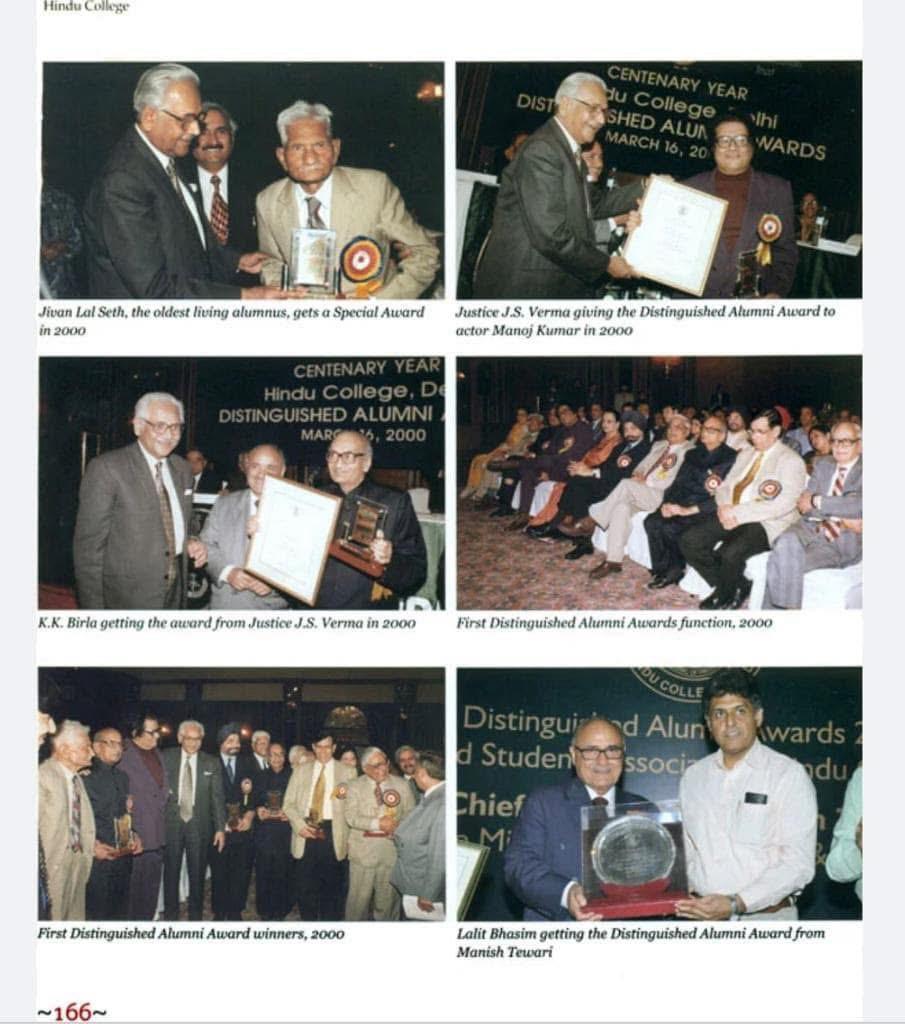
- In the year 1899 Master ji helped as a Teacher & otherwise along with his great nephew Rai Sahab Girdhari Lal in the setting up of the Mathematics and other Departments in Hindu College, Delhi and continued the association with guest lectures for students with Lala Shri Ram ji and others. In recognition to his contribution to Hindu College in the Centenary Year 1999 – 2000 Master Sheoprasad Scholarship in Mathematics was instituted by his grandson Lala Jiwan Lal Seth as the age of 100 years as the oldest surviving Hinduite who was also the Captain of Hindu College Football Team, a footballer from Ramjas High School and also part of Law College Football Team. Master ji’s son also build a 4 Storey Hostel at Dufferin Bridge for the Students which was later burnt down by rioters in 1942.
(II) English Shifting of Capital from Calcutta to Delhi – 1911 & thereafter :
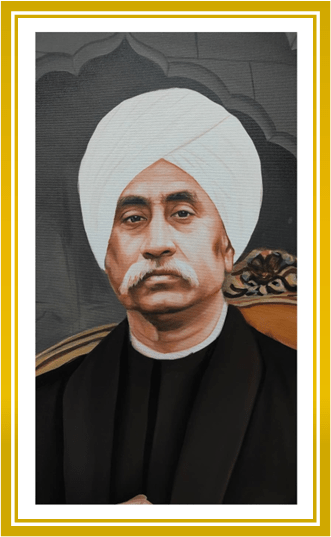
As an advisor to the English Government, a great Visionary, philanthropist and as an Educationist in the New Capital of the English India:
- Setting up of Higher Educational & Skill Development Institutions in Delhi
- Master Shiv Pershad Shilp Karya Kartri Sabha (Regd.) was established in 1914 in Delhi with prominent personalities of Delhi being its managing committee members– for skill development of Women imparting training in Tailoring ,Stitching & Knitting ( Complete the Business Cycle from Cotton to Cloth to Dress with positive Social Impact for Women with better Customer Experience) – 400 acres land with Mehndi Wala Bagh in Ballabhgarh District which was later acquired by the Government in 1967 a part of which also includes the present “Sector 16 – Market” of Faridabad.

- Ramjas School:
In 1912 Lala Rai Kadar Nath ji was a close friend of Masterji, on the advise & support of Masterji Rai Kedar Nath ji started the first Ramjas School in Darya Ganj, for which the initial building material was provided by Masterji from his 16 No. Darya Ganj Kothi which was under renovation along with monetary support. Further the first students of Ramjas School, Darya Ganj were the Seven Grand Children of Masterji whom he, after much persuasion of the English Headmaster of the English Government School, got them migrated to the newly started Ramjas School.
- Anglo-Sanskrit Victoria Jubilee Sr. Secondary School, Darya Ganj, Delhi (Estd.1869):
The A. S. V. J. Sr. Sec. School Darya Ganj, Delhi – 110 002 occupies a place of pride in the history of modern education in Delhi as the second earliest modern educational institution in the city and is a source of inspiration for a couple of great schools and colleges here. Delhi was the centre of the first revolt and first war of Indian Independence in 1857. As it was the first war of independence and a symbol of the resilience of Indians against British East India Company’s exploitative rule, it also brought distress for its citizens and ruptured Delhi’s economic, social and educational life. There was only one school prior to this and that was Anglo-Arabic School but it received a severe jolt due to the revolt and had little or no existence from the time of the ‘Revolt’ to at least till 1920s. In this critical phase, a host of Delhi’s prominent businessmen and philanthropists like Lala Rommi Mal, Rai Saheb Chunna Mal, Rai Bahadur Lala. Sheo Pershad, Lala Ram Krishan Das, Rai Bahadur Lala Ishwari Prasad, Rai Bahadur Dharma Sudhakar Krishan Das ji Gurwala and Lala Wazir Singh met at one time or the other and decided to fulfill this need by establishing a modern school for the children of Delhi and surrounding regions with Sanskrit as one of the main subjects to keep the students rooted in their culture.
- Commercial College:
Bringing together Teachers, training them, creating the curriculum for“Commercial Studies” as per the commercial business requirements to facilitate Trade & Commerce in “Delhi” within Indian & English Business Communities, importing relevant Books from Lahore, Karachi & Other places in Urdu, Sanskrit, Hindi & English and also creating subject-wise Transcripts – “Study Material” in English, Hindi & Urdu which were printed in Lahore, Karachi & Other places using his experience both as teacher and businessman ,and with help from his Teaching cum Business Fraternity, to setup “Commercial College” in a small premises in Chandni Chowk which was initially established in Lahore , later shifted it to a rented accommodation (arranged with the help of the English Deputy Commission & Controller of Estate, in the premises owned by the English Government) opposite his No. 16 Darya Ganj Kothi in No. 8 Darya Ganj Kothi overlooking the Yamuna River which was convenient to both Indian & English Students which was later known as Shri Ram College of Commerce (SRCC).
- In the year 1911 construction of First Five Storey multi storey building in Delhi “Pilli Kothi” near Novelty Cinema for renting to English Government & Industries shifting from Calcutta to the New Capital “Delhi” which in deep global recession, followed by the First World War 1914-18 was sold to British Railways in 1921 at a great loss.
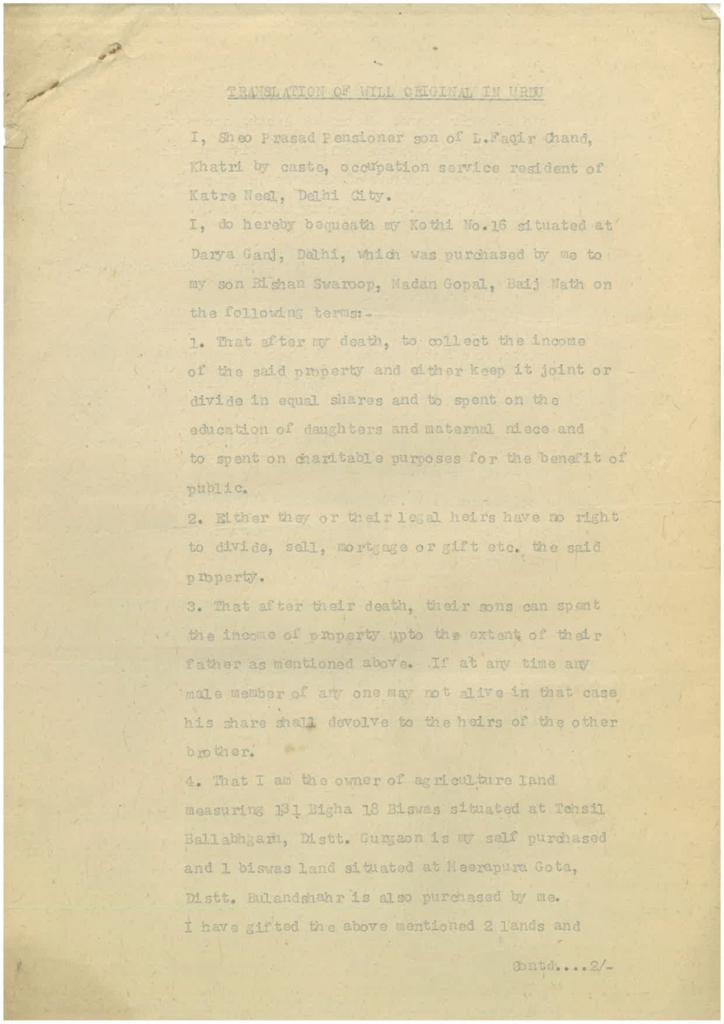
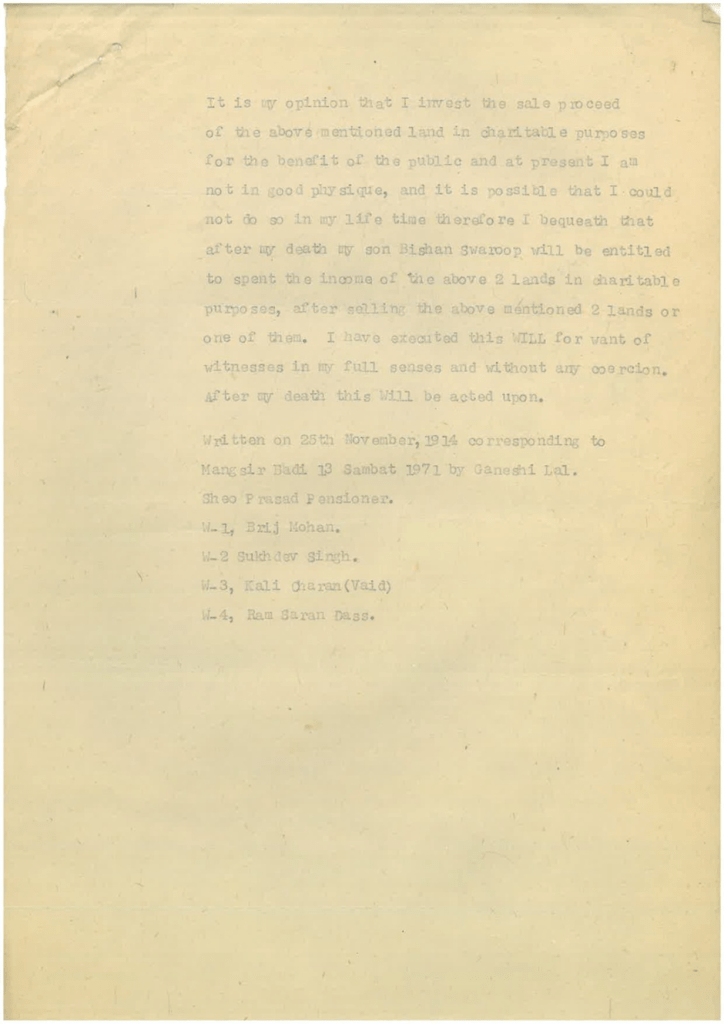
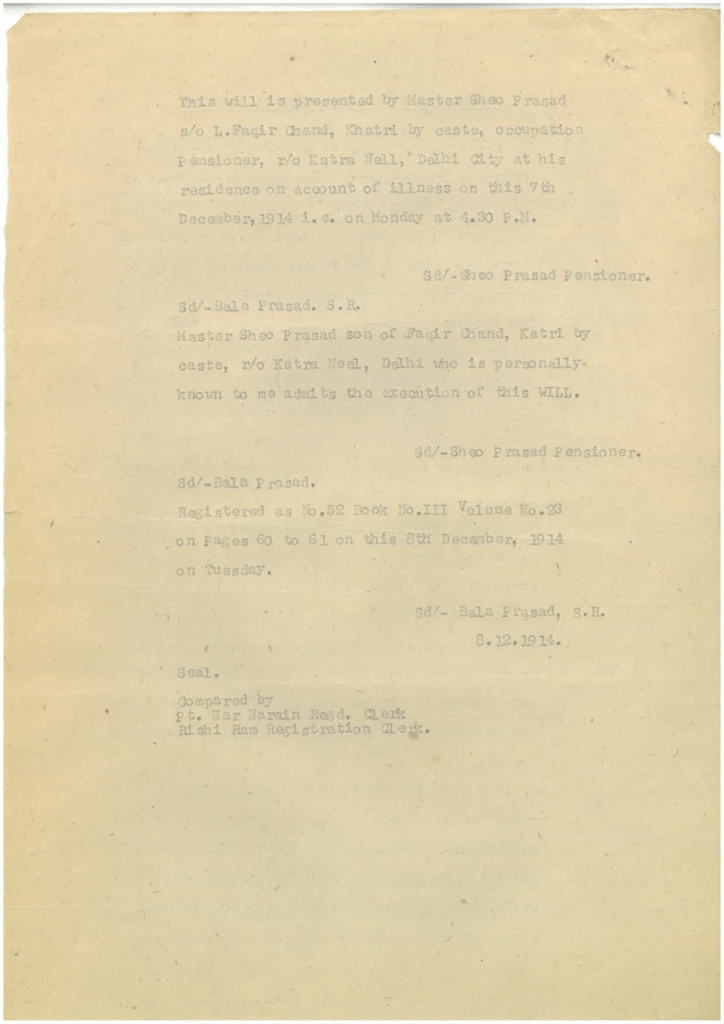
Masterji’s (Registered) Will written on November 25, 1914 ( Mangsir Badi 13 Sambat 1971 ) presented on December 7, 1914 Monday 4:30 PM registered on December 8, 1914 Tuesday vide Registry No. 52 Book No. III Volume No. 23 on Pages 60 – 61 bequeathing the INCOME OF HIS REMAINING SELF ACQUIRED ESTATE for the EDUCATION OF DAUGHTERS , MATERNAL NIECE AND CHARITABLE PURPOSE for the benefit of PUBLIC:
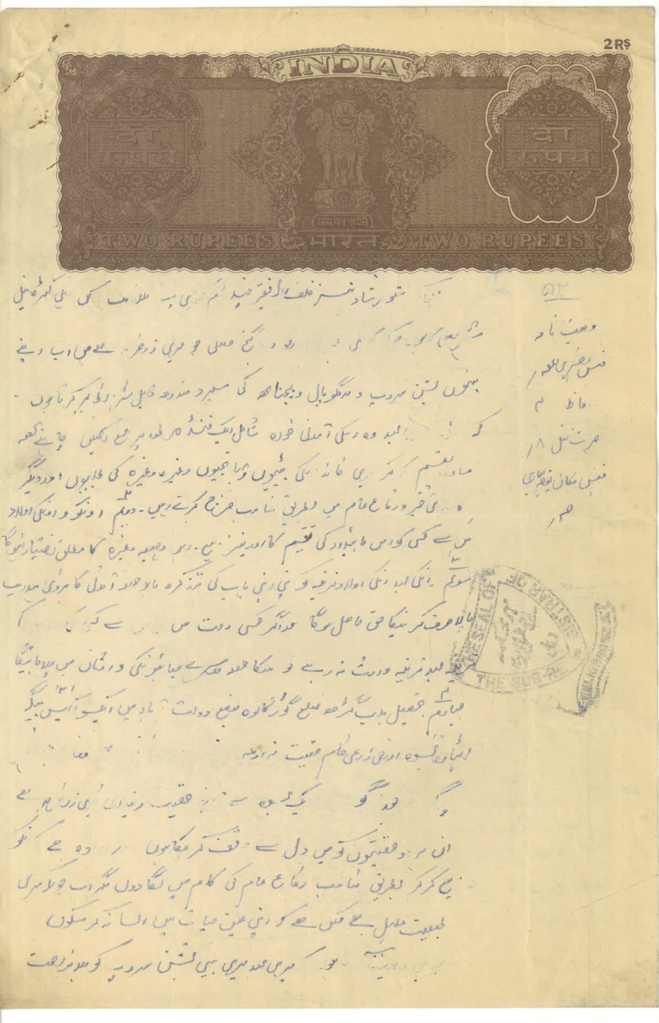
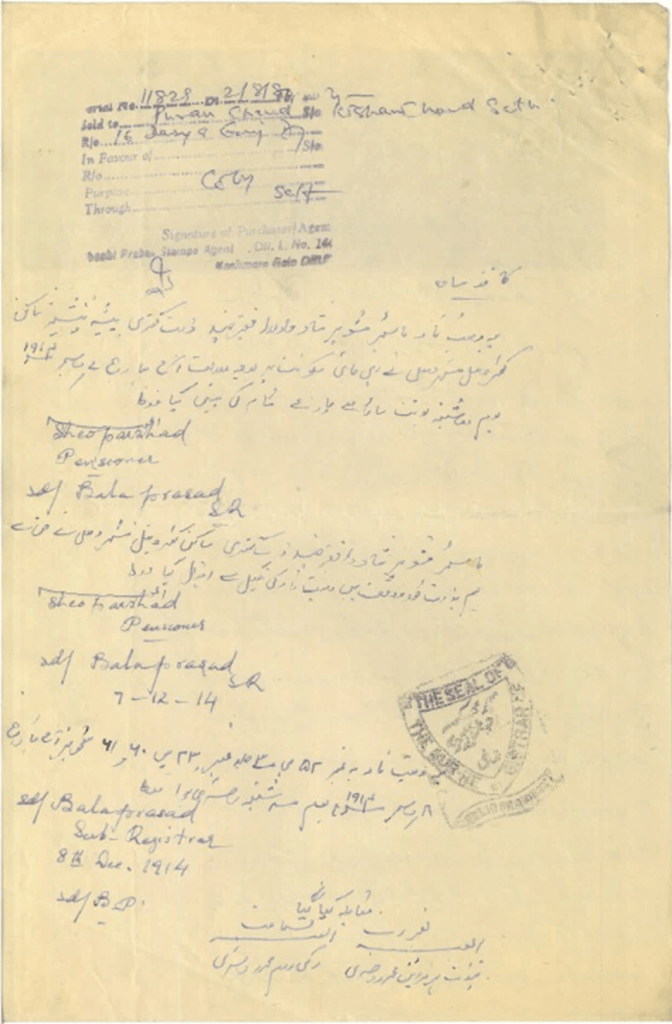
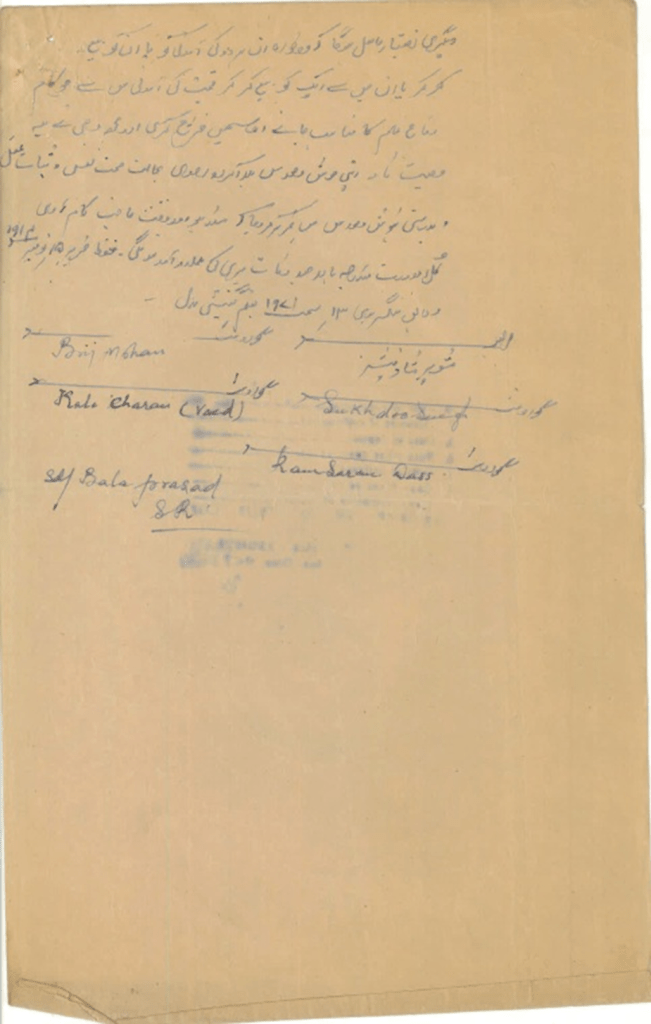
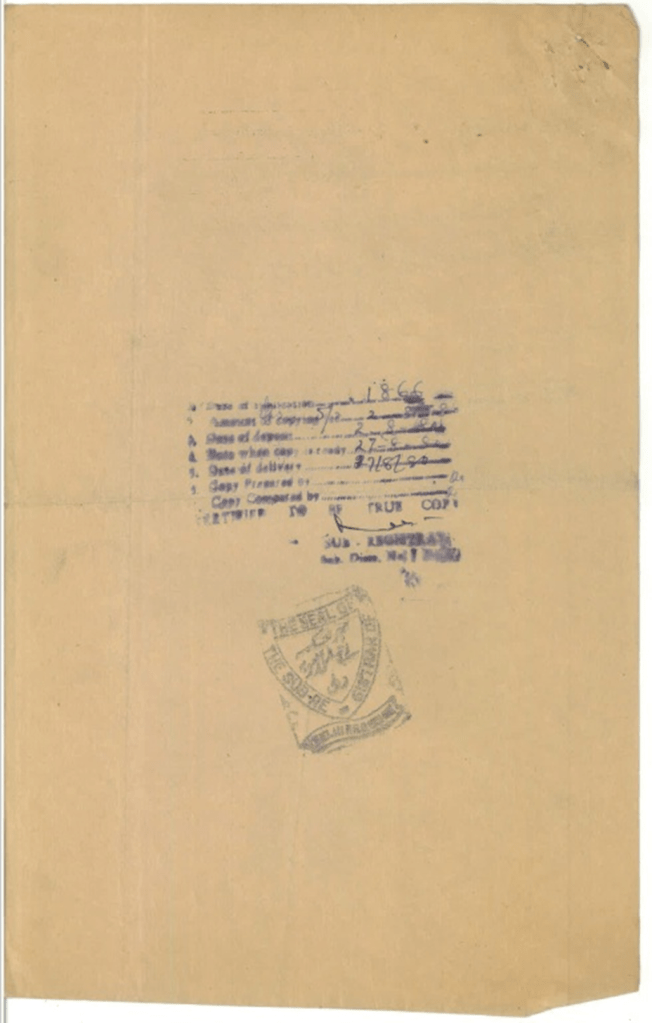
English Transcript of Masterji’s (Registered) Will: